The Jab: Why Boxing's Simplest Punch Still Wins Fights
The jab is the first punch every boxer learns and the last one they master. Here is how it works, its five main variations and why it still decides fights.
Every boxer learns it on day one. Most never stop learning it. The jab looks like nothing: a straight punch with the front hand, thrown from the stance, brought straight back. Yet it measures distance, sets up everything else, steals rounds and keeps you safe. When we watch a fight and want to know who is really in control, we usually start by watching the front hand.
This is a guide to the punch itself: what it is, how it is built from the feet up, the main variations, and why judges and coaches value it so highly.
What the jab actually is
A boxer stands side-on to some degree, with one foot and one hand forward. That front side is the lead. For an orthodox fighter (a right-hander, standing left foot forward) the lead hand is the left. For a southpaw (left foot forward, usually a left-hander) it is the right.
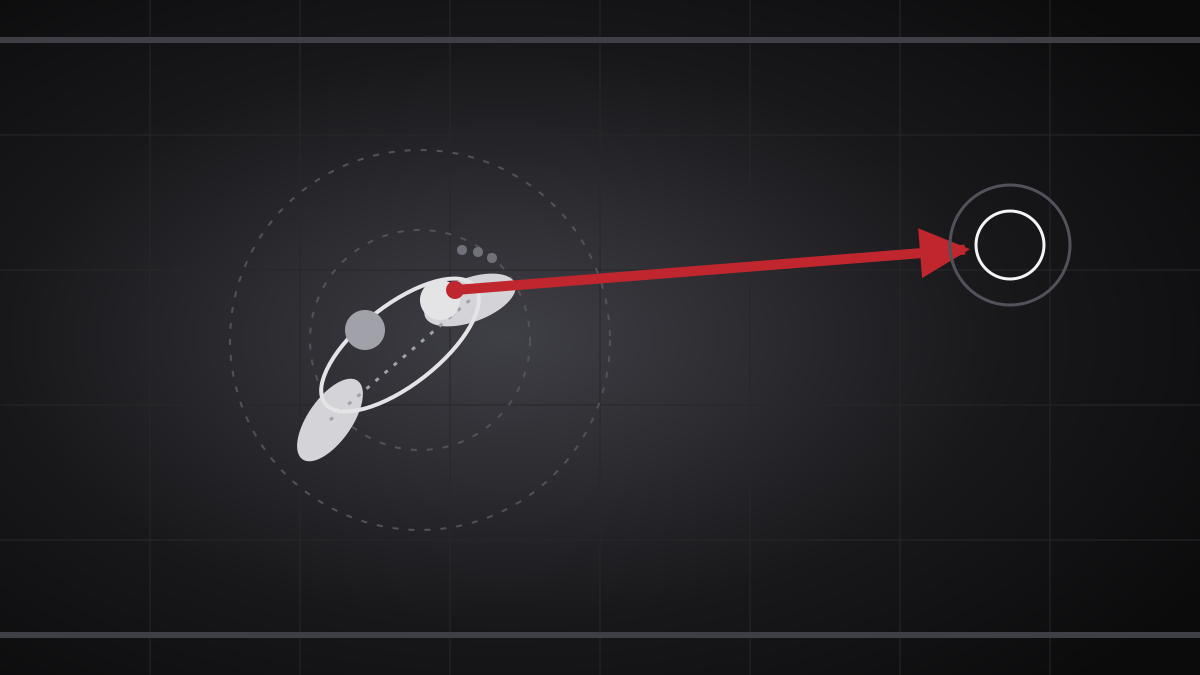
The jab is a straight punch thrown with that lead hand. It travels the shortest path to the target, a straight line from the chin-height guard to the opponent's head or body. Because the lead hand is already the closest weapon to the opponent, the jab is the fastest punch a boxer has and the one that needs the least commitment.
That last point matters most. A big rear-hand punch, the cross, rotates the whole body and leaves the thrower briefly open if it misses. A jab shifts a little weight and comes home. A boxer can throw it all night and rarely pay for it.
Built from the feet up
In the gym where Marcus coaches teenagers, the jab is taught before anyone is allowed near a heavy bag. The order is always the same: feet, hips, shoulder, hand.
- Feet. The lead foot points roughly at the opponent. The rear heel is slightly raised. A small step forward with the lead foot as the punch lands adds reach and weight; the rear foot follows to restore the stance.
- Hips and shoulder. The lead hip and shoulder turn a few degrees inward as the arm extends. That small rotation is what turns an arm punch into a punch with the body behind it. The lead shoulder also rises to cover the chin.
- Hand. The fist starts at cheekbone height and goes out straight, turning over near the end so the palm faces the floor. It comes back along the same line, faster than it went out.
- The other hand. The rear hand stays glued to the chin. A jab thrown with the rear hand drifting away is an invitation to be countered over the top.
Common faults are easy to spot from ringside. Dropping the jab on the way back. Pawing with no shoulder. Looping the punch out wide so it telegraphs. Leaning the head over the lead foot so the body overbalances. Each one hands the opponent a counter, which is a punch thrown in reply to the opponent's attack, timed to land while they are still exposed.
Five jabs, five jobs
"The jab" is really a family of punches. Good boxers switch between them inside a single round, and the variation is what keeps an opponent guessing. Here is how we break them down.
| Variation | How it is thrown | What it is for |
|---|---|---|
| Power jab | Step in with the lead foot, full hip and shoulder turn, weight transferred forward | Hurting and stopping an opponent coming forward; earning respect early |
| Flicker jab | Thrown from a low lead hand, snapping up and out with the arm loose | Speed and annoyance; disrupting rhythm and vision; finding range without commitment |
| Pawing jab | Lead hand extended and touching or pushing at the opponent's gloves | Measuring distance, blinding, setting up the rear hand behind it |
| Jab to the body | Bend the knees to drop level, keep the head off the centre line, punch to the chest or solar plexus | Bringing the guard down, slowing a mover, scoring when the head is well defended |
| Double jab | Two jabs in quick succession, often with a half step on the second | Closing distance, breaking a high guard, beating an opponent's timing on the first |
A few notes on each.
The power jab is the one that changes opponents' minds. When a fighter lands a hard, stepping jab on someone walking forward, that someone often stops walking forward. It is a "stop sign" punch.
The flicker jab comes from a low lead hand, sometimes called a "Philly shell" style guard when paired with a high rear hand and a raised lead shoulder. It looks casual. It is not. Flickers keep an opponent blinking and reacting, and they hide where the next punch is coming from.
The pawing jab barely counts as a punch and it will not score much. Its job is information: how far away is the opponent, where are their gloves, how do they react when touched? It often precedes a straight right hand.
The jab to the body is underused. Changing levels, aiming low, makes the opponent lower their elbows. Once the elbows come down, the head is more available later.
The double jab is one of the best tools for walking someone down. The first jab makes the opponent react. The second one lands while they are still reacting.
Why it wins rounds
Fights are scored round by round under the 10-point must system, and the main criterion is clean, effective punching. We explain that system in full in our guide to how a boxing round is actually scored. The short version: judges reward clean punches that land on the scoring area, and they notice who is controlling the fight.
The jab feeds both. It is a clean punch when it lands flush. And a fighter who is landing the jab is usually the one setting the distance, so they look like the one in control, which in most cases they are.
Here is an illustrative round, not a real fight, to show how a busy jab can carry a close session on our card:
| Minute | Fighter A (jabber) | Fighter B (puncher) |
|---|---|---|
| 0:00–1:00 | Lands three clean jabs, steps off | Misses a wide left hook |
| 1:00–2:00 | Double jab lands, single right hand lands | One solid right hand lands to the body |
| 2:00–3:00 | Jab keeps B at range, one body jab | Forces a brief exchange, nothing clean |
| Our card | 10 | 9 |
Fighter B landed the single heaviest punch. Fighter A landed more clean shots and dictated where the fight happened. Many judges would give A that round. Some would not. That disagreement is a big part of why boxing scoring causes so many arguments, and why we label our own cards as ours.
The jab as defence
The jab is often described as the best defensive punch in boxing, and it is easy to see why.
An opponent cannot comfortably walk through a stream of straight punches. Each jab makes them stop, block, slip or eat it. While they are doing that, they are not throwing. A good jab interrupts an attack before it starts.
It also keeps a fighter at the range they want. A taller boxer with a longer reach uses the jab to stay at the end of their own punches, out of the shorter fighter's range. Reach, here, means the distance from fingertip to fingertip with the arms spread wide, and it roughly predicts how far a fighter can punch.
And it creates angles. Jab, then step off to the side, and the opponent is suddenly punching at the space where the jabber used to be. This idea of stepping off, and fighting for foot position, gets complicated when an orthodox boxer faces a southpaw, because both lead hands are on the same side. We cover that in detail in our piece on orthodox vs southpaw and the outside foot.
Beating the jab
Every great weapon has an answer, and the jab has several.
- Slip and counter. Move the head just off the line of the jab, so it misses past the ear, and fire back. The classic reply is a rear-hand counter over the top of the jab, timed as the jab arm extends.
- Parry. Use the rear hand to tap the incoming jab down or aside, then counter into the space it leaves.
- Catch it on the glove. A tight high guard absorbs the jab. On its own this is passive, so it must be followed by a reply.
- Jab with the jab. Throw your own jab at the same moment. The longer, sharper one wins.
- Change levels and close. Duck under, step in, and work to the body at close range, where a long jab is less useful.
Pressure fighters live by those last two. If you want to know how a matchup between a forward-moving pressure fighter and a sharp counter-puncher tends to play out, our pressure vs counter-puncher preview template walks through it round by round.
How to watch it from your sofa
Next time you watch a fight, try this. Ignore the big shots for one round. Watch only the lead hands.
Ask:
- Who is throwing more jabs, and how many are landing clean?
- Is the jab being thrown with the feet, or just the arm?
- Is one fighter using it to set up the rear hand, or just pawing?
- What happens after the jab? A step off, a follow-up, or nothing?
- Is the jab going to the body at all?
By the end of the round you will usually know who is winning the fight before the commentators do. That is not a trick. It is what judges are trained to look for too.
The last word on the front hand
The jab will never be the punch on the highlight reel. It rarely ends a fight on its own. But it is the punch that makes the highlight-reel punch possible, and in close fights it is often the difference on the cards.
Learn to see it, and boxing gets clearer. Learn to throw it properly, and you understand why every coach in every gym says the same thing first: hands up, chin down, jab.