Pound-for-Pound Explained: What the Lists Measure and What They Can't
Pound-for-pound lists ask who would be best if everyone were the same size. Here is what that question measures, where it fails, and how we read it.
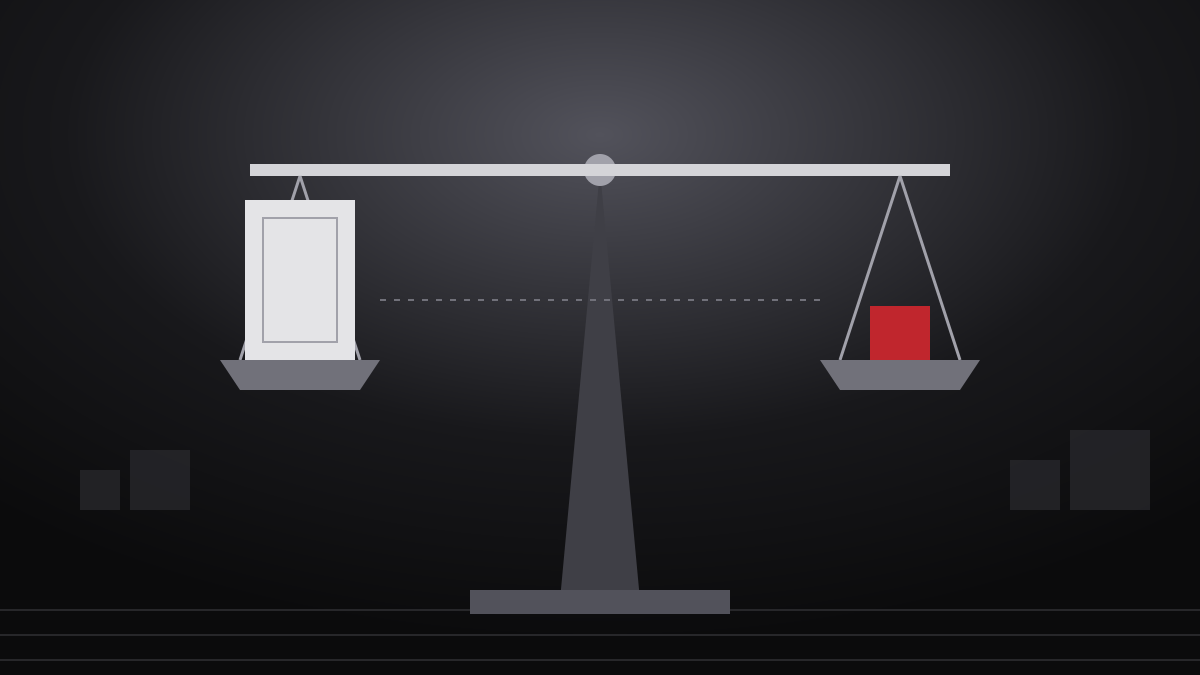
Pound-for-pound is the best argument in combat sports. It is also the one nobody can win. The idea is simple: if every fighter were the same size, who would be the best? Nobody can ever test it. That is exactly why fans love it.
In this piece we unpack what pound-for-pound lists actually measure, where the idea came from, how boxing and MMA versions differ, and the biases that creep into every list, including ours. Then we explain how we read them, and how we suggest you do too.
The question behind the list
Ordinary rankings compare fighters in the same division. A welterweight list ranks welterweights. They share a weight limit, so their results against each other mean something direct.
A pound-for-pound list (often shortened to P4P) does something stranger. It ranks fighters across every division at once. A flyweight can sit above a heavyweight. The list is not claiming the flyweight would beat the heavyweight in a real fight. Size matters enormously in combat sports, which is the whole reason weight classes exist.
Instead, the list is answering a hypothetical. Strip away the size difference. Imagine everyone scaled to the same weight. Now who has the best combination of skill, achievement and dominance?
That makes P4P a thought experiment, not a measurement. It is a structured way of comparing fighters who will never share a ring or a cage. And because it can never be settled by a real fight, it always rests on judgement.
Where the idea came from
The phrase is most closely associated with Sugar Ray Robinson, who fought from the 1940s into the 1960s, mostly at welterweight and middleweight. Writers and fans of his era, searching for a way to say he was the finest fighter in the sport even though heavyweights drew the biggest crowds and the biggest money, settled on the idea that he was the best "pound for pound".
Before that, the heavyweight champion was often treated as the default best fighter in the world, simply because he was the biggest man who could beat everyone. The P4P idea pushed back on that. It let smaller fighters be recognised for the quality of what they did, not the size of the men they did it to.
The concept caught on and never left. Today almost every outlet that covers boxing or MMA publishes some version of a P4P list, and the promotions publish their own too.
What a P4P list actually measures
Because the core question is hypothetical, every P4P list has to fall back on things that can be observed. In practice, most lists, including ours, lean on four:
| What we look at | What it tells us | Main weakness |
|---|---|---|
| Résumé | Quality of the opponents a fighter has beaten | Depends on how strong the division is |
| Dominance | How clearly they won, round by round | Can flatter fighters who face weaker opposition |
| Range of skills | Ability to win in different ways | Hard to judge without strong opponents |
| Achievement across weights | Titles or top wins in more than one division | Favours fighters with room to move |
A résumé here means the list of opponents a fighter has beaten, weighted by how good they were at the time. Dominance is about margin: a fighter who wins nearly every round on our card, clearly labelled as Ringside Ledger's scorecard, makes a stronger P4P case than one who scrapes through close decisions.
Notice what is missing. Physical size, punching power in absolute terms and reach are mostly set aside, because the whole point is to imagine them away. That is the trick of P4P and also its biggest flaw. You cannot fully separate skill from size. A fighter's style is shaped by their body. Remove the body and you are guessing.
For the method behind our divisional lists, which feed into our P4P thinking, see how we build our rankings.
Boxing and MMA lists are different
The phrase is the same in both sports. The lists behave differently.
Boxing
Boxing has many weight classes, often seventeen or more, with small gaps between them. Fighters frequently move up or down one or two divisions across a career. That makes multi-division achievement a big part of boxing P4P arguments.
Boxing also has several sanctioning bodies, each with its own champion in each division. A fighter can hold one belt while three other champions hold the rest. P4P lists often reward fighters who unify titles, meaning they beat the other champions and collect several belts, because unification is one of the clearest ways to prove you are the best in a division.
MMA
MMA has fewer divisions, with much bigger gaps between them, often around ten to fifteen pounds or more. Moving up is a larger jump, and fewer fighters manage it successfully. When someone does win at two weights, it carries real P4P weight.
MMA P4P also has to account for a wider range of skills. A fighter needs striking, wrestling and grappling. Grappling means the work of controlling, taking down and submitting an opponent rather than striking them. A dominant MMA champion is often one who can win wherever the fight goes, standing or on the mat. That breadth is something boxing P4P lists do not need to judge.
Finally, the top end of MMA is concentrated in a smaller number of major promotions, and fighters often stay with one for long stretches. That makes résumés easier to compare within a promotion, and harder to compare across them.
| Boxing P4P | MMA P4P | |
|---|---|---|
| Number of divisions | Many, close together | Fewer, wider gaps |
| Key proof of greatness | Unifying titles, winning at several weights | Defending a title, winning at two weights |
| Skills under review | Boxing only, in depth | Striking, wrestling, grappling |
| Main obstacle | Split titles across sanctioning bodies | Fighters spread across promotions |
The biases built into every list
No P4P list is neutral. Ours is not either. Here are the biases we watch for, in ourselves as much as anyone.
Recency bias
The last fight looms too large. A spectacular stoppage last month can lift a fighter several places, while a quieter fighter with a better long-term résumé stays put. Recency matters, but one result should not rewrite a career.
Activity bias
Fighters who compete often stay in the conversation. Fighters who fight once a year, or less, drift out of mind even if their résumés are stronger. Activity is a fair factor, since fighting often against good opposition takes nerve. But we try not to confuse being visible with being better.
Visibility and promotion bias
This is the big one. Fighters on the biggest cards, with the most broadcast time and the loudest marketing, are seen by more people. More viewers means more votes and more attention. A brilliant fighter in a lightly covered division, or on a smaller promotion, can be badly underrated.
Promotions also publish their own P4P lists, and those lists naturally cover only their own fighters. They are useful for understanding a single roster. They are not a full picture of the sport.
Division bias
Some weight classes are simply deeper at a given time. A champion in a stacked division faces tougher opponents than a champion in a thin one. P4P lists can reward fighters in strong divisions, which is fair, but they can also punish fighters whose division lacks contenders through no fault of their own.
How we read P4P lists
We treat any P4P list, including our own, as a conversation starter. Here is how we use them.
- Look for the reasoning. A list with no explanation is just a set of names. Ask why each fighter is where they are, and check whether the answer rests on wins over quality opponents.
- Read the gaps, not just the order. The difference between first and second is often tiny. The difference between first and tenth is usually real. Treat close places as ties in all but name.
- Check the résumé, not the highlights. A highlight reel shows a fighter's best moments. A résumé shows who they did it against.
- Remember it is hypothetical. No P4P list predicts what would happen if two fighters of different sizes met. It is a comparison of quality, not a fight forecast.
- Expect disagreement. Two informed people can watch the same fights and produce different lists. That is not a failure of the format. It is the format.
When we publish our own P4P view, it is our opinion, built from the same verified records we use for divisional rankings. We label it that way, and we update it when the fighters give us new evidence.
The final bell
Pound-for-pound is a brilliant, impossible question. It lets us celebrate fighters of every size on the same page, and it forces us to think hard about what greatness actually means in combat sports.
But it measures judgement, not fact. The best way to use a P4P list is to argue with it, armed with résumés, round-by-round evidence and a healthy suspicion of whoever has the biggest spotlight. If you want a sharper sense of how individual fights feed into all this, start with how a boxing round is actually scored.